I recently did a brown bag at work, and as a change covered a non technical topic the subject of fortified wine. This was partly to encourage the team to realize they don’t have to discuss in depth how a data structure works, why the hip new programming language is worth looking at or even how to sandbox your applications using docker containers. Any topic shared with the team is acceptable.
Since I did go to the effort of writing the content, I thought I’d put it on my blog as well since I consider it an extension of my brain and I might want the recap review at some point. What follows is more or less the presentation I threw together with the AI generated images. All content outside the slides was created by me however.
Note this is non technical, and so probably not of interest to any who follow this blog.
My Journey
I have never questioned my tastes in drinks. While my tastes have changed with regard to preferences I still enjoy many of those I have sampled. Exploring European beers from Belgium, trying and enjoying the balance of hops and malt, exploring IPA’s from the USA and lagers around the world. After a while I wanted new experiences and moved to Rums, Whisky/Whiskey/Bourbon and other spirits including Tequila, Cognac, Brandy. One thing I always liked along the way was wine. I was partial to dry fruity wines including Shiraz from Australia and Zinfandel from the USA, however I also enjoyed dessert Ice Wines from Germany and Canada and the Botrytis affected wines grown in Australia.
Recently I wanted to explore fortified wines. I had only ever really had them previously when hiking since they brought a good amount of punch for the weight and were nice to enjoy around the campfire. Not knowing anything beyond the tawny style that comes in a wine sack I had not been overly impressed with it and thought I needed to broaden my palate.
Why? Fortified Wine
So my initial impression, and most peoples impression of fortified wine is that they are sweet dessert wines, full of sugar. It was that thing your older aunt drank before dinner “Glass of sherry dear.” or that dusty bottle of port that was brought out after the Christmas meal when everyone was too far gone to really try, only for it to be stored again for next year.
However what I found was that unlike simple sweet wines, they offer a masterclass in complexity. The adding of spirits can halt fermentation preserving the natural sugars, and providing amazing depth. However not all fortified wines are sweet!
Where they are sweeter you get a triangle of complexity, with the natural sugars enhancing the flavours of the fruit, the distilled spirit adding weight to the wine and the tannins working together to create a strong framework of flavor that lingers.
I thought perhaps my tastes had regressed, but I realized it wasn’t that I was looking for a sugar bomb of sweetness you might get from a lolly/candy it was the complexity that the wines offered that intrigued me.
What? Fortified Wine
What is a fortified wine? In short its a wine that has had distilled spirit (usually grape) added during or after the fermentation process.
One reason for fortified wine existing is as a method to preserve the wine. This allowed for wine to be transported more easily, and became especially useful during the age of sail since regular wine does not like being shaken and cooked in a ships hold.
Madeira: Cooked Wine
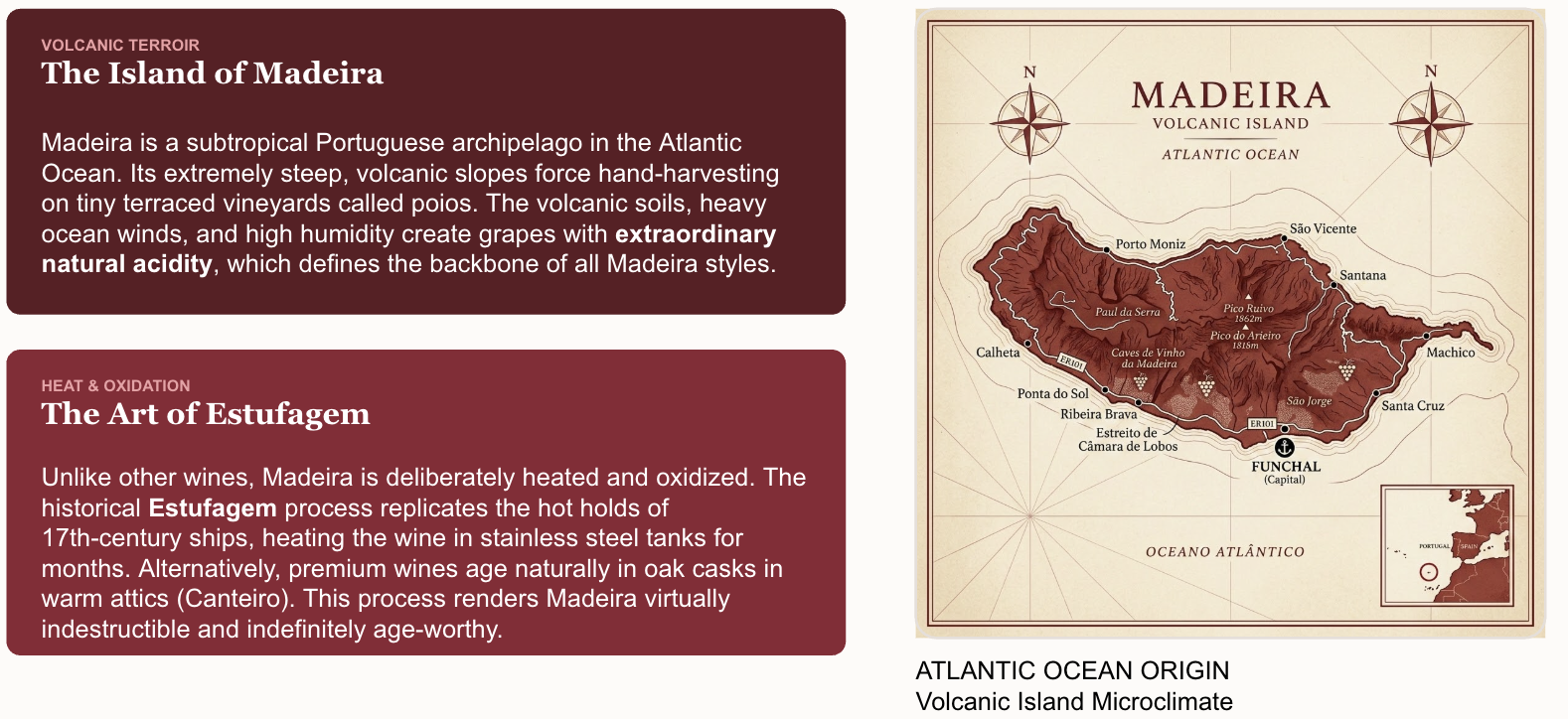
Madeira in addition to being an island discovered and colonized by the Portuguese towards the very end of the Reconquista by Henry the Navigator during the age of discovery is also the namesake given to the fortified wine made there.
As mentioned fortification was a method employed to preserve wine. This was done in Madeira, with the resulting wines sold to ships making the trip around the cape of good hope. As a result the wines ended up tumbled, cooked in the hold while passing over the equator, exposed to oxygen. This as a result changed the flavors. Generally these would be considered negative things to do to any wine, destroying it.
However sometimes a shipment of barrels would sail around the world and return. Some customers actually preferred the taste of this wine, and a new style was born. Due to the cost of sending a wine around the world producers trying to replicate the taste would heat it in sunrooms, exposed to oxygen.
The result is a wine with an extremely stable shelf life, to the point its practically immortal. You can open one, re-cork it and try it again a year later and there should be no difference in taste. It also makes tasting it an interesting experience. Most wines change with the introduction of oxygen, hence the need to decant some to open them up or by injecting air into your mouth to get the full taste. Neither are needed for Madeira, beyond giving more contact around your palate.
In my experience most Madeiras can be described as tasting of liquid marmalade, compared to Port tasting like liquid jam. Even the dry ones have that orange lemon peel taste. It is very unique and pairs well with most foods, up to and including desserts for the sweeter variants.
What I really like about Madeira is the history behind it. Knowing that it was drunk on British ships (by Officers!) as they mapped out the Australian coast close to where I lived, and drunk during the Signing of the US Declaration of Independence gives the drink a sense of place. Something I really enjoy thinking about as I sip away.
Port
Probably the best known fortified wine and as a result tends to be most peoples first exposure to fortified wines. I believe this may be why so many have a negative opinion about fortified wines as well.
In Australia fortified port style wines are not allowed to be called port. Due to that and tastes at the time most fortified wines of this style are tawnies and called such. Finding a ruby in Australia as a result is a bit of an ordeal.
That said some local manufacturers can still be a bit cheeky. While you cannot write “port” on the bottle you can write VP, short for vintage port without issue. That’s what has been done with Kalleske JMK Vintage fortified which has VP on the bottle.
Interestingly port as we know it exists mostly down to Britain and France constantly being at war. During Britain’s constant wars with France their supply of wine would be cut off, and since Britain is generally unsuitable for growing wine grapes an alternative was sought out. The British with favorable treaties with Portugal turned to it and the Douro valley reds. In order to survive the shipping they added brandy and as a result we ended up with the Port wines we know today. This also explains why so many famous houses have British names such as Cockburn’s and Graham’s (both are Scottish I think).
No idea if this is actually true, as being in Australia I have never experienced fine dining at Oxford or Cambridge. But apparently if you ever happen to be invited to some fine dining, remember Port is passed to the left, and the decanter should not touch the table till returned to the host. If you or someone to your right forgets to pass it ask “Do you know the Bishop of Norwich?”, if they say “No” your response should be “An awfully good chap, but he always forgot to pass the Port!”.
So as mentioned, tawny is one style of Port, with the other main being Ruby. My preference is for Ruby Port personally. Unlike the fruitcake taste of the aged tawnies the Ruby Ports are full of fruit flavours and closer to traditional dry wines, but with the balance of sweetness.
The styles break down roughly like this
- Ruby - Young, vibrant and fruit forward. Aged in large tanks (steel or wood) to minimise oxygen and wood contact so it keeps its fresh berry character. Drink over a week or two once opened.
- LBV (Late Bottled Vintage) - A single vintage Ruby aged 4 to 6 years in wood before bottling. Close to being a Vintage Port at a fraction of the price, and ready to drink immediately. Probably the best value entry into the serious end.
- Vintage - The pinnacle. Only declared by the wine houses in exceptional years (3 out of 10 at most). Bottled unfiltered after 2 years in oak and then meant to age for decades in the bottle. Requires decanting. While you do need to age these, the fortification process means it does not have to be done in ideal conditions.
- Tawny - Aged in small wooden casks where gradual oxidation turns it amber and develops nut and caramel notes. The longer the age statement the more complex it gets. Once opened it lasts a month or two, so its a much more forgiving bottle to have around.
There are also white ports, which tend to be a drier style than others, and Rosé style, which I have not been able to find locally.
As mentioned my personal preference these days is Ruby ports, just below room temperature. They work well with almost any food, and being slightly sweet go well with some desserts.
Sherry: Andalusia’s liquid gold
Described as a neglected wine treasure, sherry is one of those wines with the worst reputations which is least deserved. As I previously mentioned it was associated with your aunt, that drink offered in episodes of Yes, Minister, and from casks where your Whisky is aged. However sherry has a large range from some of the sweetest things you can experience to bone dry, and anything in between.
I will admit to knowing little about Sherry, and I need to try more of them.
The history angle I like about Sherry is that it became a craze in England following the sack of Cádiz by Sir Francis Drake. With the intent to disrupt the Spanish Armada the raid known as “singeing the King of Spain’s beard”. It did delay the Armada, and more importantly for this post resulted in the plunder of nearly 3,000 barrels of Sherry which on its return to England started a national obsession for the wine. Was that wine any good? I suspect probably not, but it would have tasted of victory.
So while sweet Sherry exists I want to start with the dry style. The driest of Sherry develops under a layer of yeast called flor. This is a natural yeast which occurs in the barrel. It protects the wine from contact with oxygen while it ages. As a result you get an incredibly dry wine, with a unique bready, woody and saline taste. Pencil shavings is a legitimate tasting note for these wines.
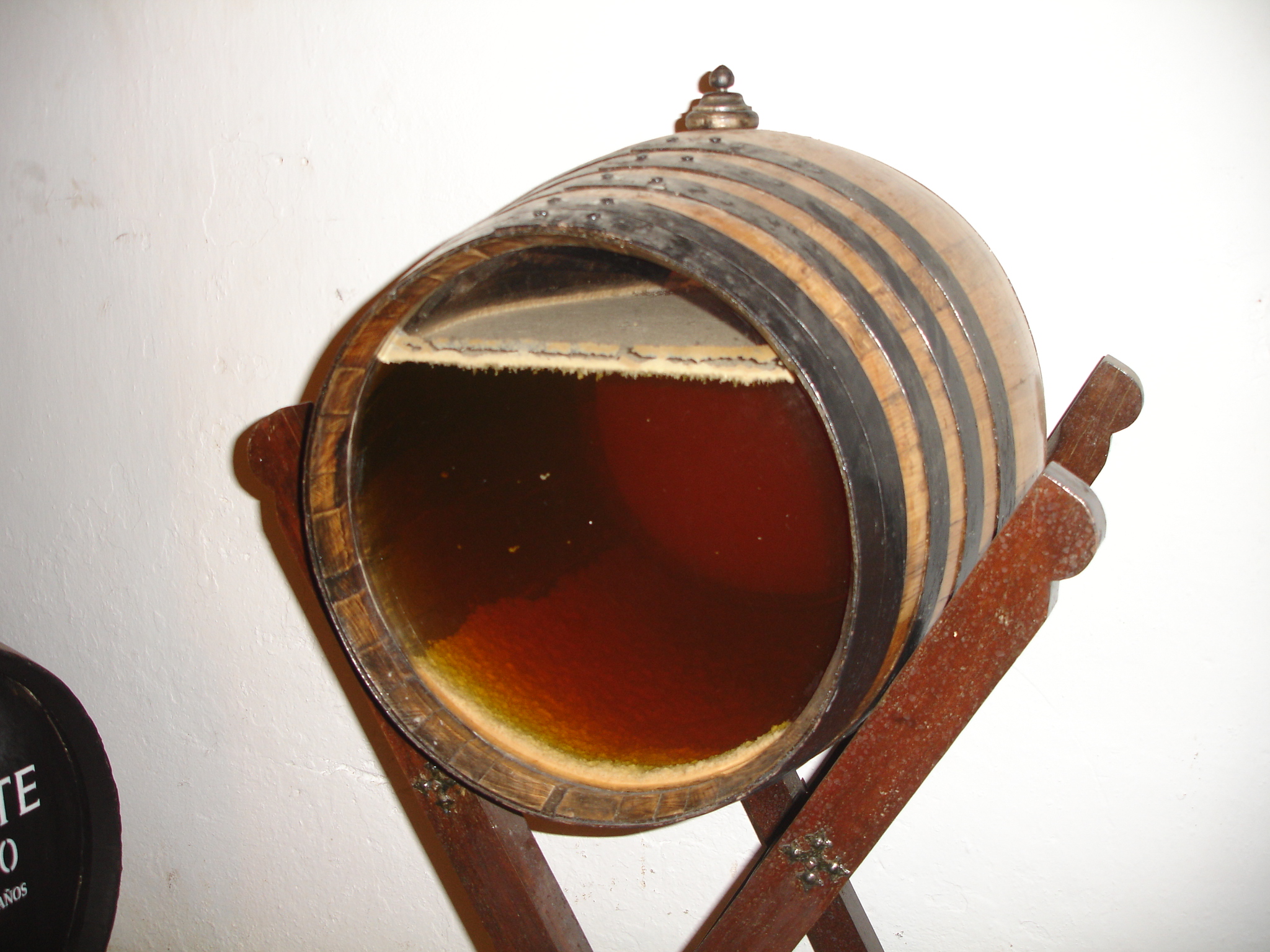
Don’t drink the dry flor/fino wines slowly. Dry Fino Sherry should be drunk fairly cold, ideally with a salty food pairing and quickly. Similar to how one would enjoy a martini. If you attempt to “taste” it you will end up ruining the experience, tasting only the alcohol and wood.
I tried one with a pairing of jamon iberico, and the nice thing about it was it would clear all flavours from my mouth. As a result each bite of the ham was like my first. A delightful experience. Note when you do open them, oxygen will destroy them fairly quickly, so keep them upright in the fridge if you plan to re-cork, and consume within a few days.
For the sweet Sherries you have your Oloroso and PX. They tend to have a deeper oxidization process which prevents the flor from generating. Some sherries such as Pedro Ximénez (PX) are made from sun dried grapes, producing a thick, unbelievably sweet (sweeter than any soft drink) wine that goes well on ice-cream or paired with bitter black coffee.
I really need to try more dry Sherries and I am yet to have tried one I didn’t like.
Marsala - The Italian peer
Marsala comes from the hills around the port city of the same name in Sicily. Stylistically the closest thing to Sherry outside Spain.
Its origin story is similar to the others, where an English merchant docked in Marsala, realized the wines tasted similar to Port and Sherry, that it was fortified and would survive the sea voyage home.
Its interesting to think that almost all classic fortified wines exist as we know of them due to wars with France and British merchants wanting a wine that could survive a sea voyage.
I don’t have much experience with Marsala. I do have a bottle at home, and it does taste like a semi dry Sherry, but I cannot comment much beyond that.
Rutherglen Muscat Truly Aussie
This is the one every Australian should know about. Muscat was among the first grape varieties planted in Australia in the 1800s, and the wines produced can be described as being unique to Australia even if the processes are indeed shared by other areas.
In Rutherglen the wine is aged for decades inside tin roofed sheds which bake in Victorian summers, slowly oxidizing and concentrating the wine. The result tastes like liquid treacle. A national treasure and criminally underappreciated here, my understanding is that collectors overseas pay serious money for it.
Very much a dessert wine, it pairs well with desserts.
Others
A few other mentions. I have not covered every fortified wine available, but the ones that are accessible easily to me in Sydney Australia. Some of the below are easily available with me, but I am yet to explore them. Others appear to be impossible to find.
- Vermouth. Yes, its a fortified wine. Similar to gin, it has added botanicals, roots and barks, which is what makes it different. Best known as the backbone of the Martini and the Manhattan. It is however perfectly drinkable on its own and comes in dry and sweet styles.
- Vin Doux Naturels. Naturally sweet Muscats from southern France, fortified like port during fermentation.
There are others including fortifieds from Greece and even South Korea however I have not been able to try them.
The value paradox
The below is specific to Australia, but some of the arguments may apply elsewhere.
Fortified wines were at one point 100 or so years ago the most popular wines on earth. Partly due to being built up to support demand when fortified wines fell out of fashion, they became arguably the single best value proposition on the shelf today.
Consider the Penfolds Grandfather Rare Tawny. That wine represents a minimum of 20 years of barrel aging and blending through a Solera system, decades of labour and cellar space and evaporation losses (angels share), and it retails for under $100. There is no table wine or whisky on earth offering 20 years of maturation at that price. A 20 year old single malt starts at a few multiples of that.
In addition two structural reasons make this possible in Australia:
- Tax. Fortified wine falls under the Wine Equalisation Tax rather than the heavily indexed spirits/beer excise. Spirit and Beer tax gets ratcheted up with CPI twice a year. Wine does not. As a result the tax gap between a bottle of aged tawny and a bottle of whisky keeps growing in the wines favour. Why this is I don’t know, but I suspect its to protect the local industry, and because the elites drink wine.
- Portuguese wages. For the imported stuff, Portugal has one of the lower wage structures in Europe. So you get lower production and cellaring costs. You get centuries of collective experience in a bottle, shipped across the world, with all the history for an extremely reasonable price.
That said, I have had a history of picking what soon becomes popular. I was into IPA’s and small breweries before that scene took off. Same story with Rum and Bourbon. So perhaps now is the time to get into them.
Where to start
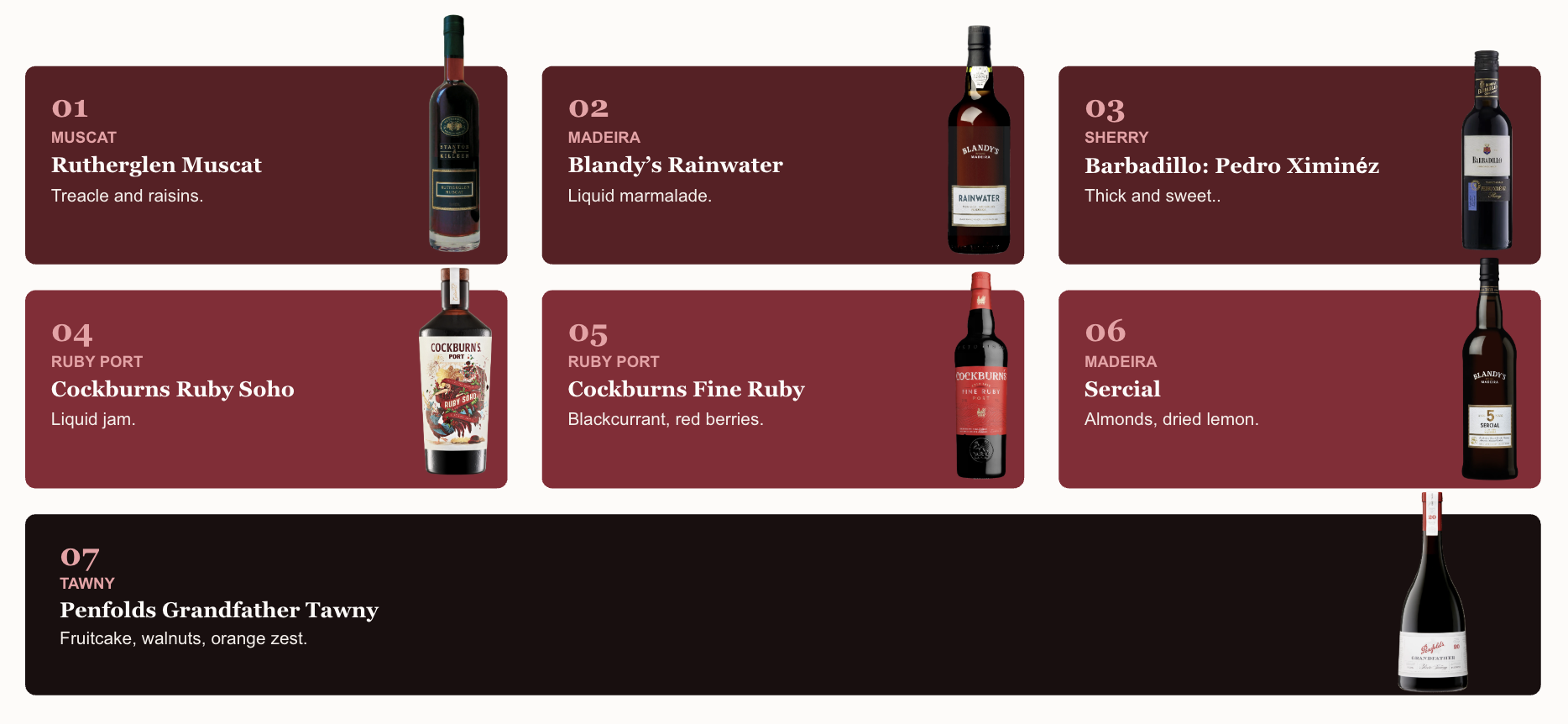
If any of this convinced you, my starting recommendations:
- A Ruby Port if you want fruity and approachable, best to start with if you like wine and found port too sweet previously.
- A Rainwater Madeira for something lighter that is essentially immortal, and puts you in the shoes of a British Officer at sea.
- The Penfolds Grandfather Tawny if you want to taste what 20 years in a barrel, and 40 years experience does to a wine.
- A Fino Sherry, served icy cold, if you like salty food and dry drinks. Keep it cold while drinking, and drink it like a martini as it smiles at you.
- A Rutherglen Muscat to support a true blue Aussie treasure
None of these are overly expensive (some are downright cheap), most will keep for ages once opened (Fino excepted), and all of them offer more complexity per dollar than almost anything else in the bottle-o.